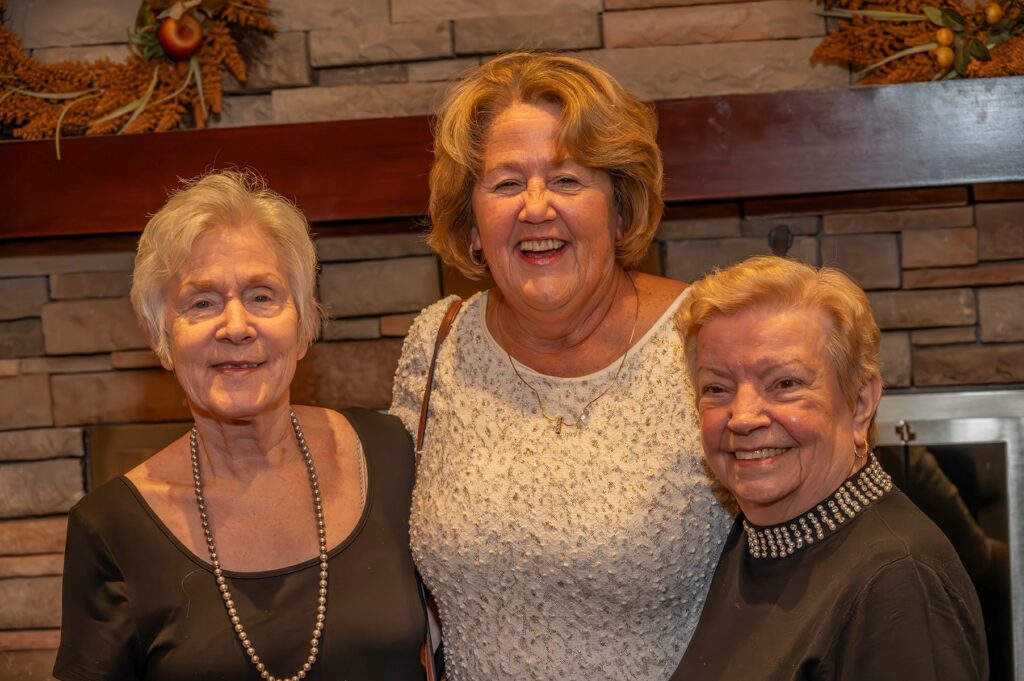
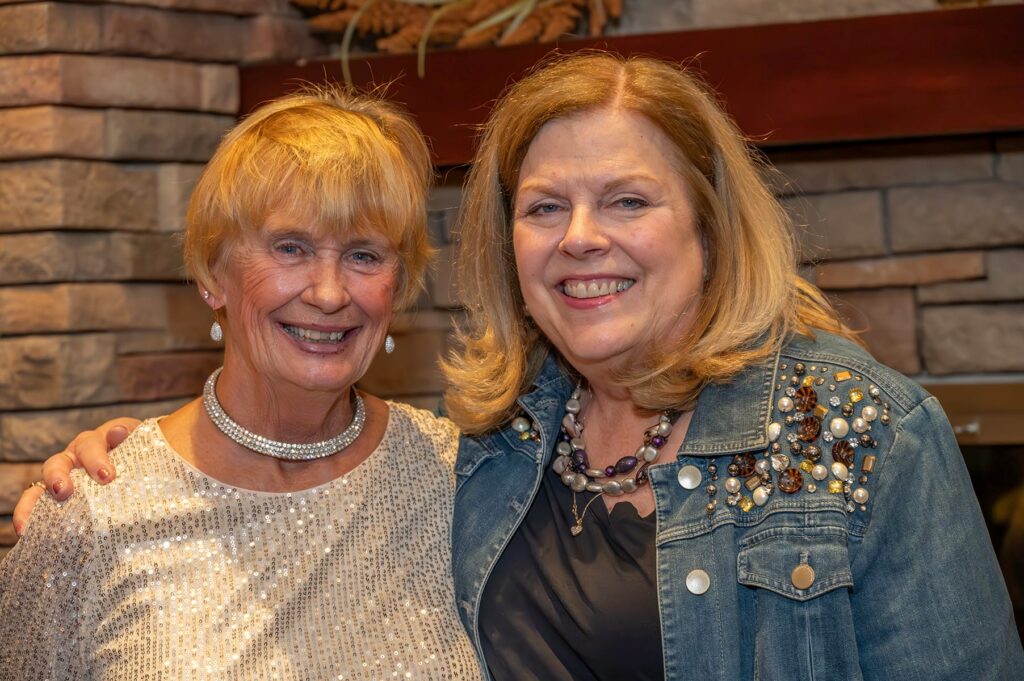
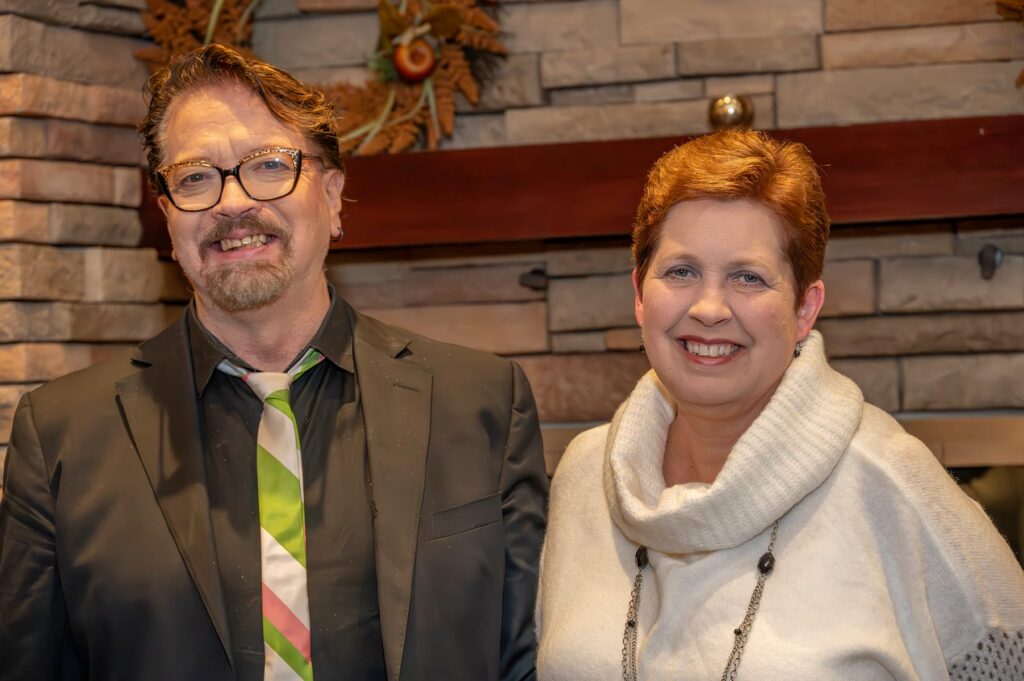
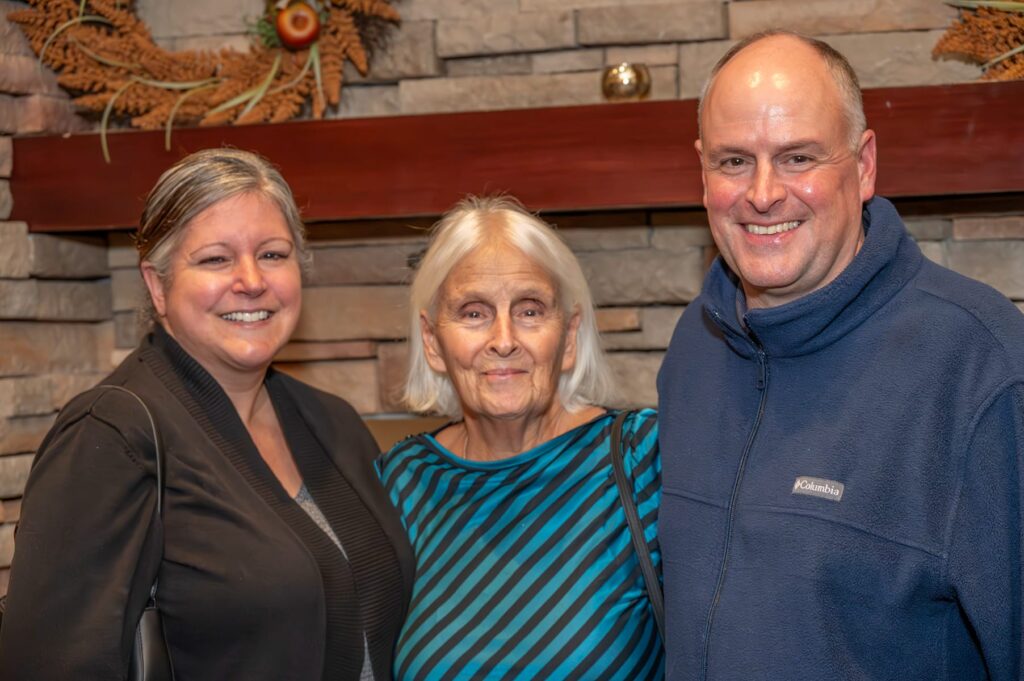
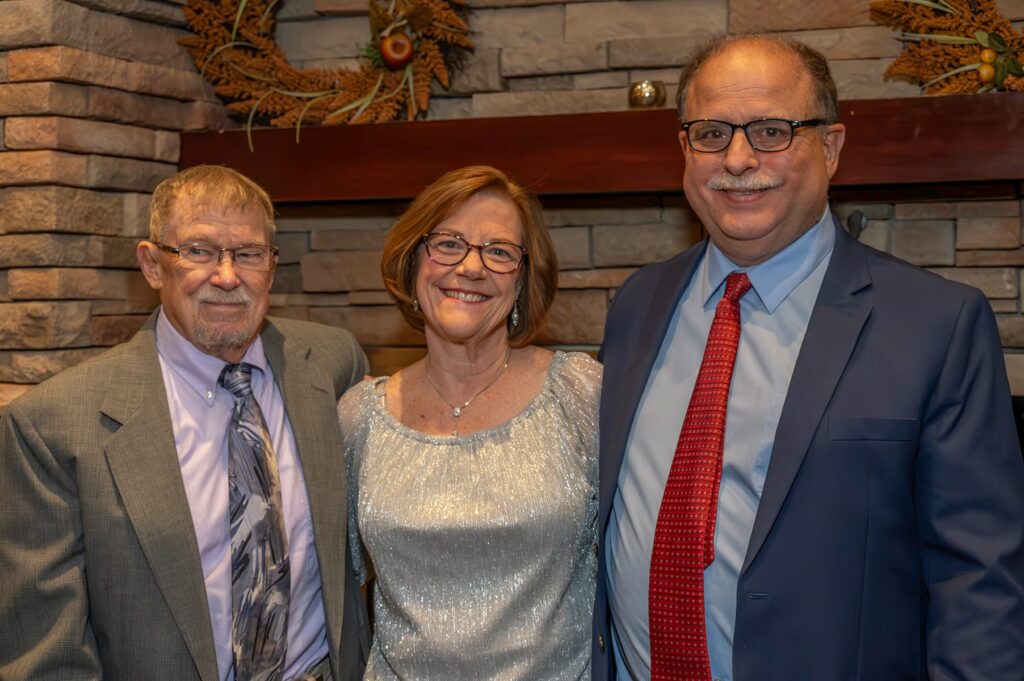
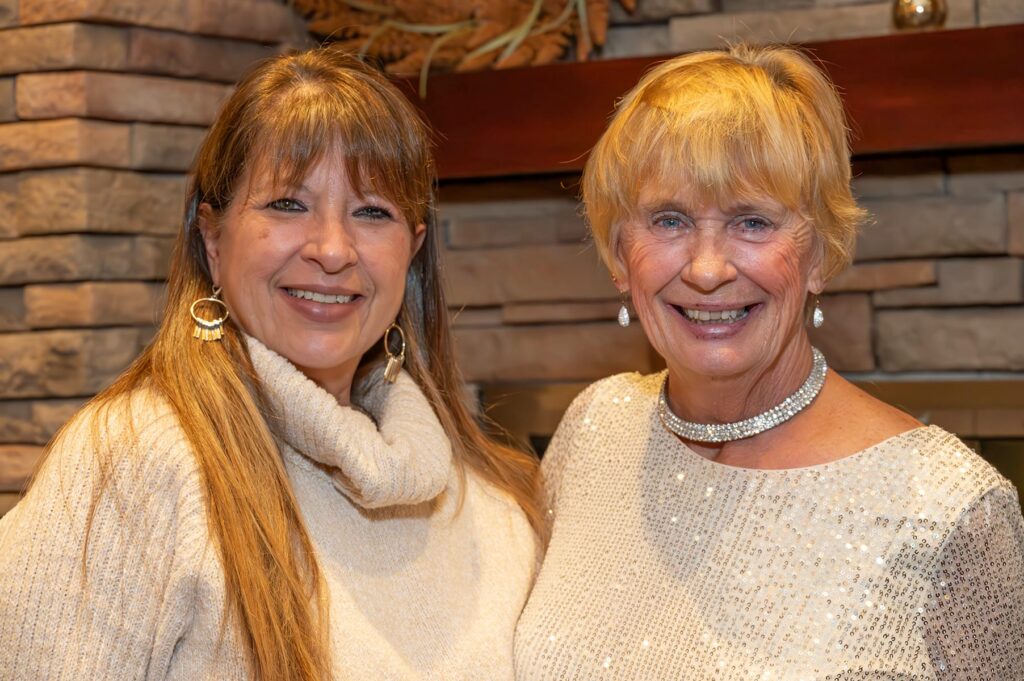
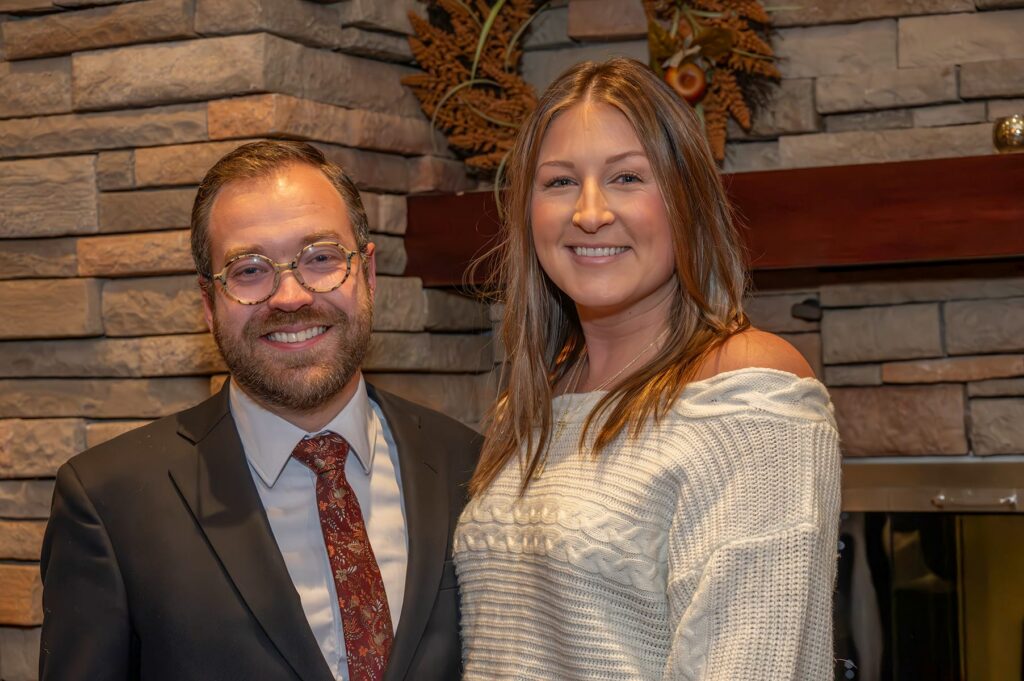
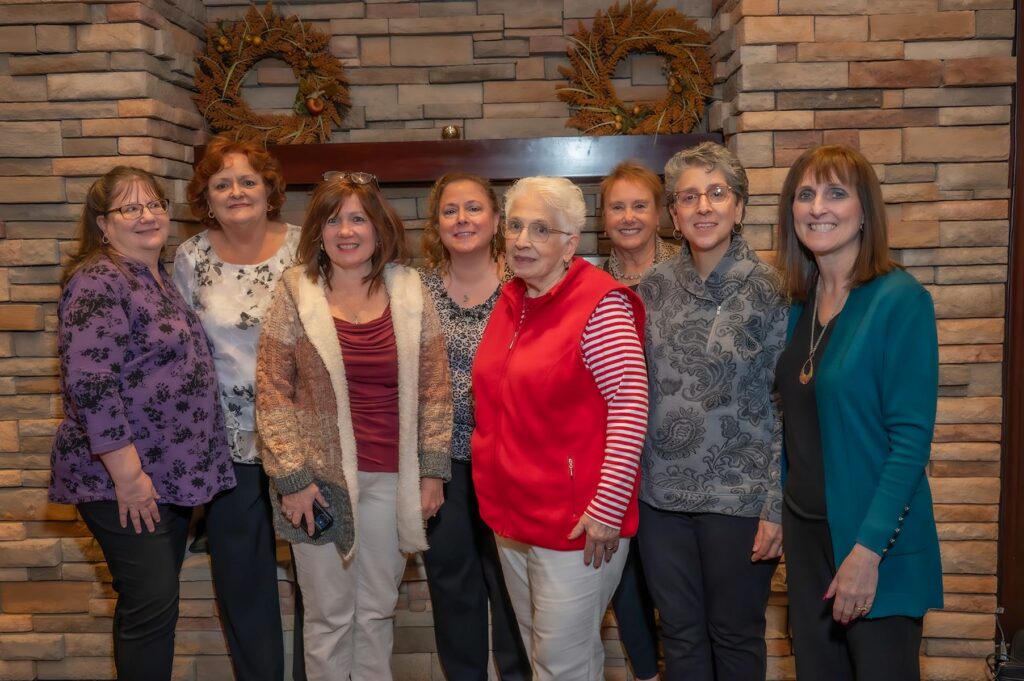
Photo Credit: All images in this post are courtesy of Bill Sherman, whose photography skillfully captured the essence of our gala.

















United Methodist Church
Photo Credit: All images in this post are courtesy of Bill Sherman, whose photography skillfully captured the essence of our gala.
In this week’s service, Pastor Peg Bowman focused on hope during the first week of Advent. She drew parallels between Jesus’ parable of the fig tree and her own experience caring for a delicate fig tree that survives Pittsburgh winters wrapped in fabric and straw. Just as the fig tree’s leaves appearing signal warmth and growth, Jesus’ words about the fig tree indicate that when we see certain signs, His return is near.
Rev. Peg then explored three scriptures: Psalm 25, Jeremiah 31, and Luke 21. She explained how David’s prayer in Psalm 25 can be our own in times of trouble, seeking God’s guidance. Jeremiah’s prophecy brought hope amidst destruction, promising a righteous branch (Messiah) would spring up. Luke 21, Jesus’ prophecy of future events and His return, was juxtaposed with the beauty of the temple to remind us that no matter how dark things get, our redemption is near. Bowman cautioned against obsessing over end-time prophecies and losing hope in Jesus’ delay, instead encouraging us to ‘watch and pray’ like sailors guiding others safely home.
Well, good morning. Can you believe it’s Advent already? I mean, my head, I think, is still back in August somewhere. But here we are, Thanksgiving weekend. Hope your turkey was good.
And it’s now the first week of Advent. The season of Advent, of course, we are leading up to the celebration of Jesus’ birth at Christmas, and we’re watching for Jesus’ return, and we are sharing the good news that God’s kingdom is coming. Now, Pastor Dylan has sketched out for us a mini-series for Advent, roughly based on the four candles of the Advent wreath. And the first candle that we have today is the candle of hope.
Our scripture also centers around the concept of a fig tree, which is completely unrelated, right? Because Jesus had said, Look at the fig tree. When it sprouts leaves, you know that the summer is near. And Jesus uses this as a metaphor for the time of troubles that will lead up to his return to earth, his second coming. Fig trees were common where Jesus lived back in the day, but most of us don’t have a lot of experience with fig trees.
But as it happens, I take care of one. Not my tree, because it’s not on our property, but I’m the one who looks after it. The tree actually sits just over the property line in our next-door neighbor’s backyard, and it was brought here from the old country by our next-door neighbor, Joe, who came from Italy many, many years ago. And sadly, Joe and his wife, Fran, are no longer with us, but the tree survives, which is a bit of a miracle, because fig trees are designed for Mediterranean weather.
They’re not built for Pittsburgh winters. But back when Joe was alive, every year he would dig up that tree, keep a large ball of dirt around the roots, and wrap it up and put it in his semi-heated garage for the winter. And every spring he’d bring it back out, plant it back out in the backyard. But sadly, like I said, Joe hasn’t been around for the past two or three years.
And while I have permission from the new owner of the property to tend to the tree, I don’t have the physical strength to dig it up and carry it anywhere. So for the past couple of winters, I have been wrapping it in place, stuffing straw around the roots and wrapping fabric over it. And I’m pleased to say the fig tree has survived. I haven’t seen any figs on it yet.
But based on my experience, there are a couple of things I can tell you about what Jesus is saying about this fig tree. Number one, the leaves don’t come out until the warm weather is near. That’s very true. Fig trees are very sensitive to cold, and sometimes they’re a better indicator of when the last frost will be than the farmer’s almanac is.
They just let you know. If the fig trees, if the leaves are opening up, it’s time to get all the other plants in because it’s time to plant. Number two, when the fig tree starts to grow, it grows fast. I mean, the tree I look after has almost doubled in size this past year.
Jesus says when you see these things happening, the kingdom of God is near. In other words, it won’t be long. It’s going to come fast. Things will move very quickly.
I’m getting a little bit ahead of myself. Let me back up now and take a look at today’s scriptures. We have readings from Luke, Jeremiah, and Psalms. They all tie in together, support each other.
So I’d like to speak to all three in chronological order so that we can kind of see how it builds. The Psalm for today, Psalm 25, was written by David probably before he was crowned king. The Psalm was written when David was going through a tough time, and he was actively waiting for the Lord and asking God for help. And David says to God, Show me your ways.
And he says to God, I trust you. Don’t let me be put to shame. And this is not a matter of David doubting God, because even Jesus prayed a similar prayer. It’s more like just a request for God to stay close.
David’s request to see God’s ways is both a request for guidance and a request that God would keep David away from sin, accidental or otherwise. And David says about God, He leads the humble in what is right and teaches the humble his way. Even as king to be, David is keeping his ego in check. He knows how great God is and how small David is by comparison.
And David’s words are important to us because we may also find ourselves in times of trouble in our lives. David gives us a prayer that we can pray. We can adapt to our own circumstances because no matter what’s happening, God is always the same and God knows what to do. And so we pray for God’s guidance with our limited human understanding, praying for help and direction in times of trouble, which is something the ancient Israelites were neglecting to do when we come to our reading from Jeremiah.
At the time that Jeremiah was writing his words, the nation of Israel was on the brink of collapse, both from the inside and from the outside. The northern kingdom had fallen a couple of generations before and now the southern kingdom was under attack from the outside, from the Babylonians, and under the influence of idolaters and scoundrels on the inside. So Jeremiah, the last of the prophets before the Babylonian captivity, had been preaching warnings to the people of Israel and to the king and to the priests for years, and he had been thrown into prison for doing this. And Jeremiah had been saying, as God told him to say, that Israel’s about to fall and the city of Jerusalem is doomed, everything around them is in a state of collapse.
But the people haven’t listened and they haven’t put away their idols and they haven’t turned back to God. And now the invaders are at the doorstep. And things were so bad in Jerusalem that people actually started tearing down their own houses in hopes that if they destroyed the city themselves, the invaders wouldn’t like it and would go away. It didn’t work.
In the middle of all this destruction and despair, Jeremiah, inspired by God, changes his tune. Jeremiah buys a piece of property as a way of saying, After we’ve been deported, we will be back. This will be my land someday. And he gives the people of Israel these words, The days are surely coming, says the Lord, when I will fulfill the promise I made to the house of Israel and the house of Judah, namely a Messiah.
In the middle of all the destruction, there’s a sign of hope. And I want to emphasize the importance of this message because as I keep in contact with other pastors around the country, many of us this year have been drawn to the words of Jeremiah. Jeremiah’s mission speaks to a nation that is in rebellion against God, that is going its own way, doing its own thing with no concern for others or for the future. For Jeremiah, during the dark days that followed, when things were at their worst, the Word of God broke through the darkness and said, I will fulfill the promise.
I will cause a righteous branch to spring up for David and he will execute justice and righteousness in the land. These promises bring two things to our awareness. First off, speaking in terms of the fig tree, the future will include a sapling growing up out of the dead stump of the past. And secondly, these words look forward to the promised coming of the Messiah.
Jeremiah says, The name of this Messiah is the Lord our righteousness. And the name of Jesus translated means, The Lord is our salvation. See a connection there, right? We are reading these words during difficult times, when many people around us have lost a sense of security, when many people are afraid, when many people don’t know what to expect and can’t tell the truth from lies. And God’s promise is this, A righteous branch will spring up.
It’s a word of hope in the darkness. A righteous branch will spring up. Words spoken to counteract all the life-sapping despair-inducing evidence to the contrary. Lift up your heads.
Salvation is coming. God’s promises will be fulfilled. Which brings us then to Jesus and to our reading from Luke. Now this particular passage in Luke is taken, it’s from the, towards the end of Luke’s gospel, shortly before Jesus is arrested.
So we’re kind of, we’re coming, like we’re almost starting the end of this, the beginning of the story and the end at the same time. In a sense, coming this close to the cross, it’s kind of an odd way to begin Advent, except that the cross is the reason why Jesus came in the first place. And so with this juxtaposition, the reading from Luke begins in the shadows of sorrow and hate and moves into the light of hope. As the scene opens, Jesus and the disciples have been sitting together in the temple.
And just a few moments before, as we read a couple of weeks ago, Jesus had been remarking about a widow donating two pennies, giving all that she had. And a few moments later, the disciples remark about the grandness of the temple and its architecture. I’ve been thinking about that church over in Paris has been rebuilt. You see those beautiful Notre Dame, right? The pictures, the beautiful, how gorgeous that church looks, redone.
Same basic idea here. They’re looking around at the architecture of this building and saying, Wow, is this cool? And Jesus comments that the time is coming when not one stone will be left on another. And the disciples are shocked, partly because the temple was the center of Jewish faith and partly because it was huge. I mean, who could possibly knock the temple down? But their first question was, When is this going to happen? And Jesus gave them an answer with many layers.
And the first thing that Jesus says is, Be on guard. Be alert. It’s the same message that Jesus gives in the parable of the wise and foolish virgins. You remember that? So those of us who serve the Lord, we need to be ready.
We need to be awake and watching. We need, we are like guards guarding a treasure or like bridesmaids and groomsmen waiting for the wedding to start. We must be ready to move at all times. Jesus then describes a time of great distress and danger when there will be wars, insurrections, nation rising against nation and kingdom against kingdom, earthquakes, famines, plagues, and signs in the heavens.
It will be a terrifying time, a time of unspeakable horrors and death and destruction. But no matter how bad things get, we as God’s people are called to be alert and watching and helping anyone in need who we meet while we wait. We are placed where we are by God to save lives when the world gets dark. Jesus says, But before all this occurs, they, meaning the authorities, will arrest you and persecute you and hand you over to synagogues and prisons and kings and governors because of your association with me.
Consider this an opportunity to testify, Jesus says. Be ready with your testimony. Know God’s truth. Stand with it.
Stand by it. Be ready to speak it. Jesus says, When you see Jerusalem surrounded by armies, know that its desolation has come near. Now that part of Jesus’ prophecy has already happened, which doesn’t mean it couldn’t happen again, by the way.
It has happened. It happened in the year 70 AD. The historian Josephus was an eyewitness to the destruction and he wrote about it. I will not read you his account because it is absolutely horrific and I’m not sure I could get through it, but if it’s of interest, Google Josephus and the fall of Jerusalem.
The entire text that he wrote is available on the internet. Like I said, it’s a horrific story. About that horrific day, Jesus said to the disciples, When you see Jerusalem surrounded by armies, know that its desolation has come. If you’re in Judea, get out.
Run to the mountains. And those in the city must leave and those in the country must not come in. That’s how bad it was. Nobody in the city survived that day.
Not one person. And then moving on in the prophecy, Jesus talks about signs in the sun and moon and the stars. And now we’re in a different time frame. Now we’ve stepped out of ancient history and we’re moving into the future.
Now is when Jesus says, It’s like the leaves of the fig tree. When the leaves sprout, you know the summer is near. When we see unusual signs in the stars at night and the nations are in anguish because of the state of the oceans and people are giving way to panic because of all the troubles in the world, then we will see the Son of Man, Jesus himself, coming with power and great glory. When we see all these things, Jesus says, Lift up your heads because redemption is drawing near.
And whenever I read these words, I’m kind of reminded of the movie Shawshank Redemption. It’s a Stephen King story. There’s some pretty horrific things that happen in that movie. But like Jesus’ words here, the ultimate message is hope.
That’s why the movie is called Shawshank Redemption and not The Shawshank Tragedy. When you see these things happening, your redemption is near. And as troubling as things are, it’s time for hope. But Jesus says, Be careful or your hearts will become weighed down and all this will come on you unexpectedly like a trap.
And again, we need to remember that as God’s people, we are called to be on watch. Like members of the military, we are on duty. It’s our place to understand what we see around us and stand with God and help anyone that we can who is suffering because of the unholiness and rebellion in the world, particularly if people in need are widows or orphans or foreigners, as it says in the Gospel of Matthew. We need to encourage one another and be ready.
Now one word of caution, when we talk about the end times or the return of Jesus, there are some temptations to avoid. We need to avoid becoming obsessed with the predictions in the Bible. I have known people in the past who have gotten so into what Jesus says about the end times and revelation and mixing in all these prophecies, they’ve actually put together timelines on paper that stretch the entire length of their living room walls. Just here’s what’s going to happen this way and this way and this way.
Don’t do that. It’s not that easy to map out. And actually the purpose of all of this, all these prophecies, is to give us hope, not to be able to know exactly what’s going to happen on every single day. We know this, in the end, God wins.
That’s all we need to know. So when we look at the prophecies, we don’t need to be afraid and we don’t need to become obsessed with them. We are children of God. We are called by God.
And the one who calls us will keep us no matter what happens. So fear not. We also want to avoid the mistake that some people make, which is saying, Wow, Jesus is taking a long time coming back, and then starting to think that maybe it won’t actually happen. Very common attitude in our world today.
It’s the attitude of faithlessness that leads not to freedom, but to slavery. Slavery to drugs, slavery to pornography or gambling, slavery to the TV news, internet rabbit holes, conspiracy theories, and ultimately the inability to tell the difference between truth and lies. Thing to remember is that God is real and God speaks truth and our faith is not misdirected. Jesus says, Look at the fig tree.
The leaves are on the tree. Summer is near and so is the return of the king. So while I was in the process of getting ready for this sermon, I came across an old hymn. Never heard this hymn sung before.
I don’t know how it goes, but it’s written by Fanny Crosby, who wrote a lot of the hymns in our hymnal. And the words I thought were so appropriate, I just wanted to share them. She wrote, Watch and pray that when the master cometh, if at morning, noon, or night, he may find a lamp in every window, trimmed and burning clear and bright. Watch and pray.
The Lord commandeth, ‘Watch and pray.’ ‘Twill not be long. He’ll gather home his loved ones to the happy veil of song. And that reminded me of another old hymn called, Let the Lower Lights Be Burning.
Has anybody ever heard of that one? Okay, a few. Good, okay. It’s basically a song written for sailors. It talks about how God keeps the light on in the lighthouse for sailors who are lost at sea so they can find their way home.
But it also says that it’s our job, yours and mine, to keep the lower lights burning. Those are the lights along the shore that guide the boat in to the land. That’s our part. Let the lower lights be burning.
So for this first week of Advent, we live in a world that is dark, confusing, sometimes dangerous. Advent comes to us in a time of shadows, when the days are short and night comes early. And when we look at the world around us, it looks like war and sorrow and poverty and hate are winning. But God is strong.
And Jesus gives us each a candle of hope, not just to inspire us, though it does that, but to take the light of hope out into our world. Take the light of hope to soldiers coming home from battle, to refugees without a safe place to call home, to doctors and healthcare workers who are constantly being asked to do more with less, to prisoners who don’t have an attorney, and yes, that does happen all too often, to the addict who can’t find a way out. Take the candle of hope. We enter the shadows wherever they are, carrying the candle, carrying God’s good news.
A light is coming. Jesus our brother is on the way. And Jesus says, When these things begin to take place, stand up and raise your heads, because your redemption is drawing near. Amen.
In this week’s service, led by Rev. Dylan Parson, the congregation explored the themes of eternity and Christ’s kingship as they approached Christ the King Sunday. Parson began by illuminating the context of Revelation, underscoring that it’s a pastoral letter intended to comfort and guide seven struggling churches in Asia Minor. He emphasized that despite present circumstances, Christ is the eternal King who has already won and will ultimately return in victory.
Parson also drew parallels between these ancient churches and the modern-day South Hills community, encouraging listeners not to succumb to resignation or despair but to remember their place in God’s eternal plan. He referenced Matthew 6, where Jesus teaches about worrying and provision, highlighting that God is sovereign over all creation. Parson concluded by stressing the freedom in yielding control to Christ, allowing believers to love and serve without reservations or worry about failure.
Transcript
So I’m aware that this is probably more a pastor thing, but I wonder if it’s something that you might feel sometimes as well. And that is that I feel very spiritually tuned in with the church calendar. By which I don’t mean the gala or the rummage sale coming up, not that church calendar, but the liturgical calendar, you know, Advent, Christmas, Epiphany, Lent, and so on. So whenever we get to this time of year, or really about two months ago, I find that I am so sick of what’s called the season after Pentecost, or ordinary time, you know, whenever we got green up here and I’m wearing green.
I want Advent, right? I want something. I’m longing for this season of waiting for Christ, this season of O come, O come, Emmanuel, of darkness and light, of blues and purples and lighting the candles. And this is actually why I lean so hard into that All Hallows Eve service in October, because it’s the same kind of vibe. We get to do it a little bit early.
But we get there next Sunday, finally. It’s Advent, and we’re already here, right? Advent is around the corner, and with it is this new liturgical year as we start the cycle of our stories one more time. But at the same time, November has a lot to offer, such that we shouldn’t just jump straight from Halloween to Christmas like the Dollar General does. And something that I really appreciate about the liturgical calendar is the way that November seems to really be about eternity.
Recall that we started this month with All Saints Day. We remember those Christians who have come and gone before us from the very beginnings of the church all the way through this past year, who surround us now as that great cloud of witnesses that’s described in the letter to the Hebrews. And there’s such a beauty in that, I think, that we’re not alone at this time, but we’re serving Jesus, living as the body of Christ alongside everyone from the apostles to John Wesley to Cordelia Long-Horning, who donated this land, to your first Sunday school teacher, to the pastor who baptized you. I preached on All Saints Sunday at Hilltop, and I talked about the Reverend Walt Heyman, a name that none of them remember 50 years on, but who grew up at the Arlington Avenue Evangelical United Brethren Church, who became the first pastor ordained out of the new Hill Top United Methodist Church in 1972.
That church bought him his first stole, the red stole that he wore at his ordination. And he would go on to become my confirmation mentor in Slippery Rock 40 years after that, and he would serve as one of my first and best examples in Christian ministry. They don’t remember him, but they produced him. He helped get me here today.
And it’s amazing the way that we really exist in the company of all who have come before us in faith. Death and the passage of time don’t separate us the way we might usually think. And you never know how your life is going to intersect with the saints of the past or the future. And so now we’re finishing the month of November on Christ the King Sunday.
And we’ve turned to the book of Revelation, and we turn our eyes to the one who is called the Alpha and the Omega, the one who is and was and is coming. And that, of course, is Christ, our King, our Lord. And this is some of my favorite imagery in all of scripture. And in my mind, I still hear it in the King James, the one who was and who is and who is to come.
I just, I love that phrase. And here in chapter two, we begin with what is simply the introduction to the book of Revelation, the heading to the letter. And it starts, John, to the seven churches that are in Asia. And so what that tells us as we begin Revelation is that we’re reading a letter here from John of Patmos or St.
John the Divine, he’s known sometimes. And he may or may not be the same John as the Apostle John. But it doesn’t really matter. Because John is in exile.
He’s imprisoned on the island of Patmos, which is off of present day Turkey. That region is known as Asia Minor. So that’s why these seven churches are referenced as being in Asia. And John was sent to the island of Patmos in exile.
It was a result of anti-Christian persecution under the Roman Emperor Domitian. So Revelation is very long for a letter, obviously. But John has a lot of time on his hands because John is in prison, a prisoner for the Lord. And now we don’t know John’s exact relationship with the larger church, with those congregations in Asia.
But it seems that he’s a really well connected regional leader. He knows these seven churches in Asia personally. He knows their people. He knows their personalities.
Every church has a personality. He knows their situations. And his purpose in Revelation is to share what God has to say to those churches. So understand this when we’re reading Revelation.
It’s not intended to be some kind of hidden secret code or this piece of impenetrably complex theology. Many have obviously argued that. And it’s definitely filled with symbols that would have made more sense to them than to us. So it needs some digging.
But above all, Revelation is this pastoral letter. It’s a letter from a pastor to help guide seven little congregations in their lives together as they seek to follow Christ in a really hostile environment. They’re having a very rough time. So John is functioning as a pastor as much as he’s functioning as a prophet.
And he’s helping to guide them through the tough times they find themselves in by way of these visions that he’s received from God and transmits to them. And he does that by writing this letter in the form of what’s called an apocalypse. And we have an idea of what apocalypse means. But in Greek, that simply refers to the genre of writing that means unveiling.
Apokalyptos in Greek means just the curtain is open. You see behind the veil. And what John is doing is he’s unveiling by pointing the church’s attention upwards to things that are true but can’t necessarily be seen easily in the everyday muck and difficulty of life. And chief among these is Christ’s victory over sin and death, his imminent return, his kingship.
Even though it seems at that time, like the Roman emperor and so many others, are much more powerful. John’s point is that things are not as they seem. As dire as it appears, Christ is king. Christ will come in victory.
Christ has already won. We’re not going to dive into the whole book of Revelation over the next few weeks. We’ve got Advent stuff to do. But there is enough even in these four brief verses to get a sense for what God is trying to impress on these seven churches and now what he’s got for us.
And that is that Christ has died, Christ is risen, Christ will come again. Christ is king over all the universe. And John opens these two dozen chapters of Apocalypse with these first few revelations, these first few affirmations. And one of them is that the eternal monarchy of Christ includes now.
Whether it feels like Christ is in charge over our world or not, it’s now. Because he is the one who is and was and is coming. There’s a famous saying, Don’t believe everything you think. I think it’s very helpful in a lot of ways.
And that is so wonderfully true here. We might think, we might feel that we’re far from God’s kingdom. It might not feel like God’s running things. It certainly doesn’t feel like Jesus is reigning over our world.
But through John, through Revelation, we’re reminded of what God says and what the church affirms together. And that is that his glory and power is forever and always. Amen. Jesus is everlasting and constant.
And our present moment is just that. It’s just a moment. And again, I don’t know about you, maybe this is a me thing too, but for me, it certainly doesn’t feel like we live in the midst of eternity. It’s hard to get that big picture.
To me, it feels like we live in this just eternal now, where we’re just barely able to see forward a month or so. We can’t see past the next work week, the next major holiday, the next due date for the gas bill. And, you know, here in the church, the next finance report to church council that causes us to collectively go, Hmph! But Christ our King is hidden behind a veil if we’re unable or unwilling to take that longer view. And I’ve said this before, but I still believe it.
Those of you who are born and raised here, I don’t know if you feel this or not, but there’s this sort of spirit, I think, that hangs over Pittsburgh, over the South Hills, that I’ve never experienced anywhere I’ve lived before. There’s kind of this resignation that things will stay the same or get worse forever. When things are tough, we kind of spiral. We catastrophize, we’re sure the end is near, and not in the good revelation kind of way.
And we in the church fail to remember when we think like that, that we stand in the same lineage of these churches that are in revelation, and in the lineage of those that will be standing at Christ’s return. It’s a long timeline. And who knows, maybe we’re one of those churches that will be standing at Christ’s return. This is all so much bigger than us and our tiny imaginations, our brief lifespans, because so is Jesus.
You would think this would be easier for us to grasp when parts of our scripture are well over 3,000 years old. This is a long game. The gospel reading from Matthew 6, I have to talk about that, because I think it pairs so perfectly here. In addition to the reality of his reign till and beyond the end of time, Jesus affirms that there’s no reason to worry about tomorrow, because God will provide.
Short-term, long-term, today, forever, Jesus reminds us that God is sovereign over the whole thing, from clothing the lilies of the field to feeding the wild birds. God is the God of all creation, and Christ is the King, while we’re very much not. We’re not powerless, to be sure, and we’re called to serve God with the best that we have, with generosity, the best of our abilities, our gifts, but we’re certainly not in control either. And that hurts a little bit, but it should be an incredible relief, too.
It makes us free to recklessly love and serve and give of ourselves without making God reliant upon us. There’s a real freedom in that. What a relief that we do what we can, but it’s all really in God’s hands. Our job is to come alongside, using all that we have and all that we have been given by God to help build the kingdom, but when it comes down to it, we’re not the ones driving.
We’re helping. Faith in Christ the King is recognizing that he has got it, and we just do our best today and every day. And so we can give of ourselves without any reservation about failing or worrying about whether it’s enough, because we’re putting our lives, our faith, in God’s trustworthy hands. And we know how the story ends, in the victory of the Alpha and the Omega, the first and the last, the King who is and who was and who is to come.
In the name of the Father, and the Son, and the Holy Spirit, amen.
You must be logged in to post a comment.